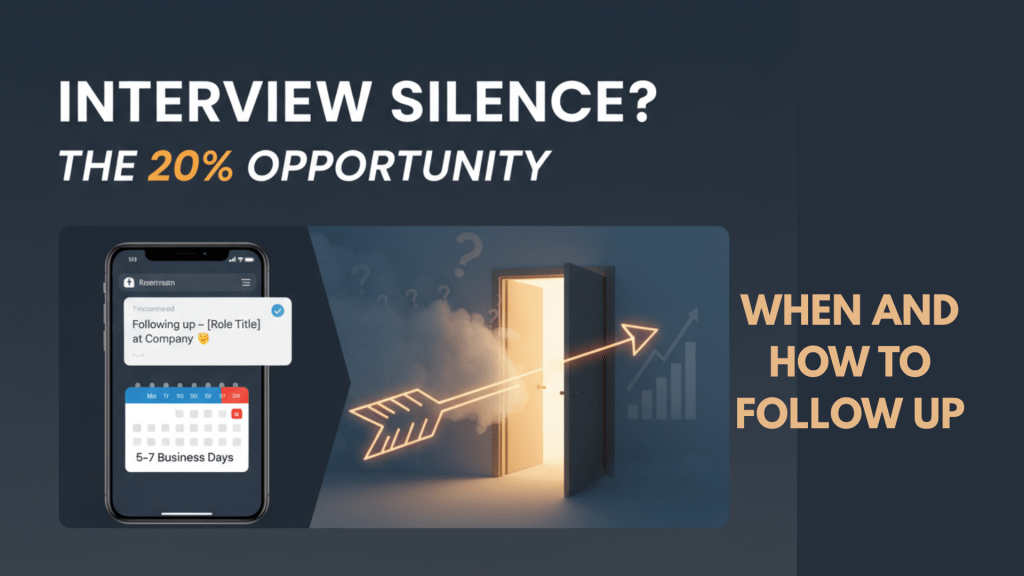
The job interview went well. It’s been a week. Radio silence. Your anxiety is building, but you’re afraid following up will make you look desperate.
What’s your next move?
I wrestled with this question throughout my job search this year, sent dozens of follow-ups, and tracked what actually worked. Here’s what I learned.
The 80/20 Rule of Silence
When a company is genuinely interested, they make it clear. You’ll get proactive updates, clear timelines, enthusiastic responses, and fast movement. When you hear crickets after an interview, your candidacy is usually dead or dormant.
But, and this is important, “usually” isn’t “always.”
About 20% of the time, silence doesn’t mean rejection: the hiring manager is on vacation, budget approval is delayed, you’re the backup candidate, or it’s simple administrative oversight.
One professional follow-up email captures that 20% upside with virtually no downside.
When Following Up Makes Sense
Not all follow-ups are equal.
Always follow up if:
- You’re in the final round or close to it
- It’s a role you genuinely want
- You established strong rapport with the interviewers
- They gave you a timeline that has now passed
Consider following up if:
- You’re at an earlier stage but it’s a decent fit
- It’s been a week since your last contact
- You’re continuing your search but want to stay visible
Skip the follow-up if:
- The role was a poor fit
- You had a bad interview experience
- You spotted red flags about the company
- You’ve already followed up once with no response
Where to draw the line? One follow-up is professional persistence. Multiple follow-ups start looking desperate.
Timing Matters
Wait 5-7 business days after your last contact if they gave no timeline. If they said “We’ll get back to you in two weeks,” wait until day 15 or 16.
Respect their process, but don’t wait indefinitely.
Why Email Over Phone?
In a phone conversation, emotions can slip through. You might sound anxious, overeager, or pushy without meaning to.
A written email is stoic and serves the purpose without the risk of tone derailing your message.
Plus, you’re not putting them on the spot for an immediate answer they may not have.
Some people will tell you that follow-ups are annoying or come across as pressure tactics. But if a single professional email makes them reject you, you weren’t getting the job anyway. Companies that want you won’t be put off by one courteous check-in.
How to Write the Follow-Up Email
Here’s a template that works:
Subject: Following up – [Role Title] at [Company]
Hi [Name],
I wanted to follow up on the [Role Title] position.
I remain very interested in joining [Company] and contributing to [specific thing you discussed in the interview].
Happy to provide any further information. Looking forward to hearing from you.
Regards,
Avoid:
- Apologizing for following up
- Expressing anxiety (“Hope I’m still being considered…”)
- Piling on multiple asks
- Emotional language
- Re-explaining why you’re qualified
What Happens After You Follow Up
You’ll get one of three responses:
1. They respond positively: “Thanks for checking in. We need a bit more time…”
Great. You’ve kept yourself visible. Wait until their new timeline passes, then you can send one more (just one) reminder.
2. They respond with rejection: You now have closure. Move on with clarity rather than wondering.
3. No response: This is functionally a rejection. File it under “rejected” and redirect your energy elsewhere.
The Bottom Line
Your instinct that silence usually means rejection? You’re right about 80% of the time. But one professional email could capture that remaining 20%. Whether it’s catching them at a decision moment, surfacing an administrative oversight, or keeping you warm as a backup candidate.
The investment is five minutes. The potential return is an offer. That’s a bet worth making on roles you genuinely want.
When you don’t follow up, you’re left wondering “what if?” for weeks, draining mental energy you could be directing toward other opportunities. A single email gives you closure one way or another.
Eventually, following up is about being strategic with high-value opportunities while not wasting energy on dead ends.
 Musings by Madhav
Leave a comment