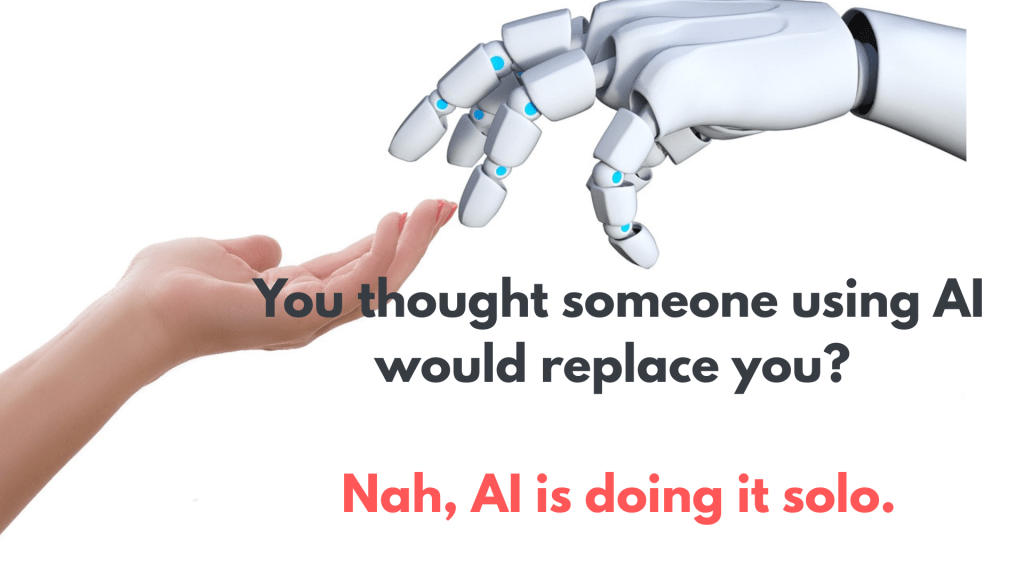
Six months. 576 applications. 4 interviews. And still, no job.
When his younger brother, a recent graduate from a top private university in the US, shared his struggle in landing a job, Rogé Karma thought it was a fluke. Until he realized that it was the same story all around him.
On the other end of the spectrum is Shawn. A computer science degree and 21 years of solid tech experience. From an engineering job that fetched him $150k, he now drives for DoorDash (and lives in an RV trailer).
As Carmen Van Kerckhove grimly notes, “Shawn isn’t a fluke. He’s a forecast.” She continues: “It wasn’t that long ago that “Teach your kids to code” was considered foolproof advice. Now ChatGPT can spit out functional code in seconds—and that bulletproof path is looking more like a punchline.”
It’s a cautionary tale for knowledge workers. “Because the jobs AI is coming for first aren’t the ones most people assumed. They’re not manual labor or frontline retail. They’re not cashiers or delivery drivers.
They’re the people with resumes like yours.”
Elsewhere, Shawn paints a dark picture of what’s to come: “If your job is performed on a computer all day at any skill level, you should have already begun in the last 2.5 years working on your plans for your joblessness in the near future.”
What’s actually happening?
Among all the articles I’ve read about AI’s impact on work, The Intelligence Curse posits the most probable scenario in disturbing detail. Briefly, it argues that AI is all set to disrupt the organizational pyramid as we know it.
(Disclaimer: The images below are courtesy The Intelligence Curse; I’m only referencing them).
Here’s the typical organizational pyramid we’re all familiar with.
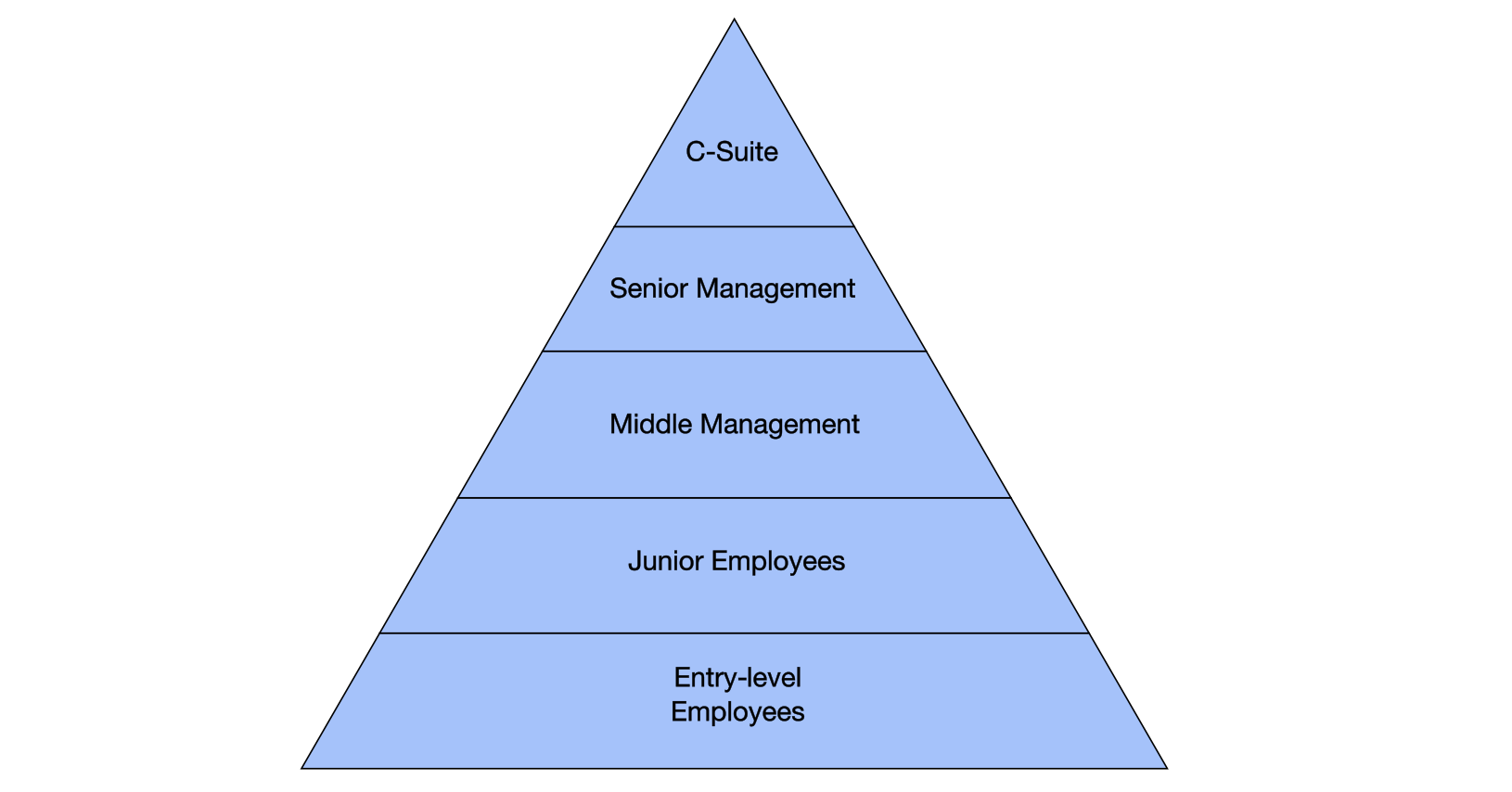
This system facilitates the upward flow of talent even as it needs new talent to replenish the bottom layers.
The article argues that the current AI advancements allow companies to freeze the hiring of entry-level employees. This is Stage #1 of AI replacement.
Harvard economist David Deming is quoted as saying: “When you think from first principles about what generative AI can do, and what jobs it can replace, it’s the kind of things that young college grads have done” in white-collar firms. “They read and synthesize information and data. They produce reports and presentations.”
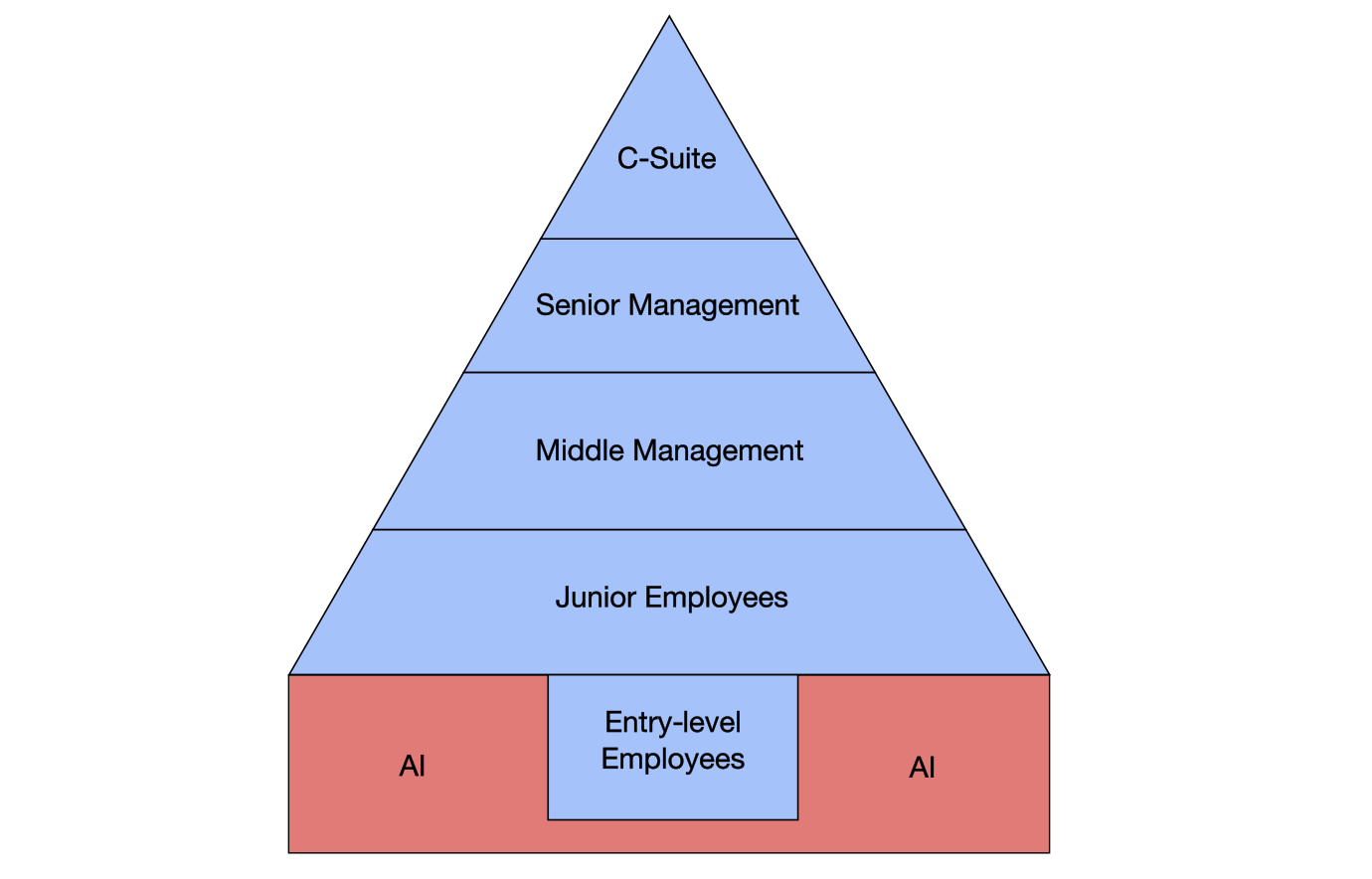
Today is the worst that AI systems will ever be. As AI advances, it will be sophisticated enough to do the work junior employees currently do. That’s stage #2.
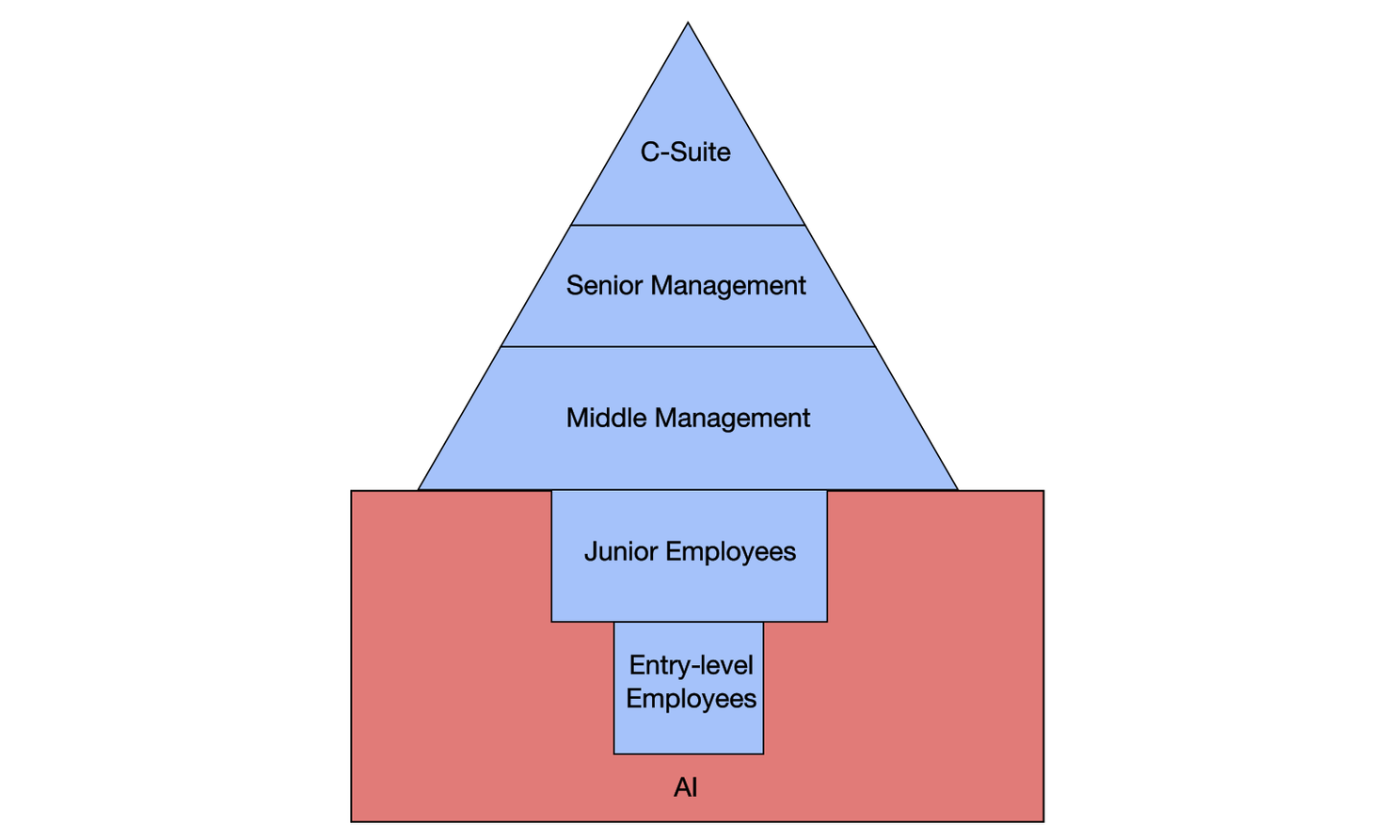
Taking it to its logical culmination, the article hypothesizes the stage #5 to be as follows.
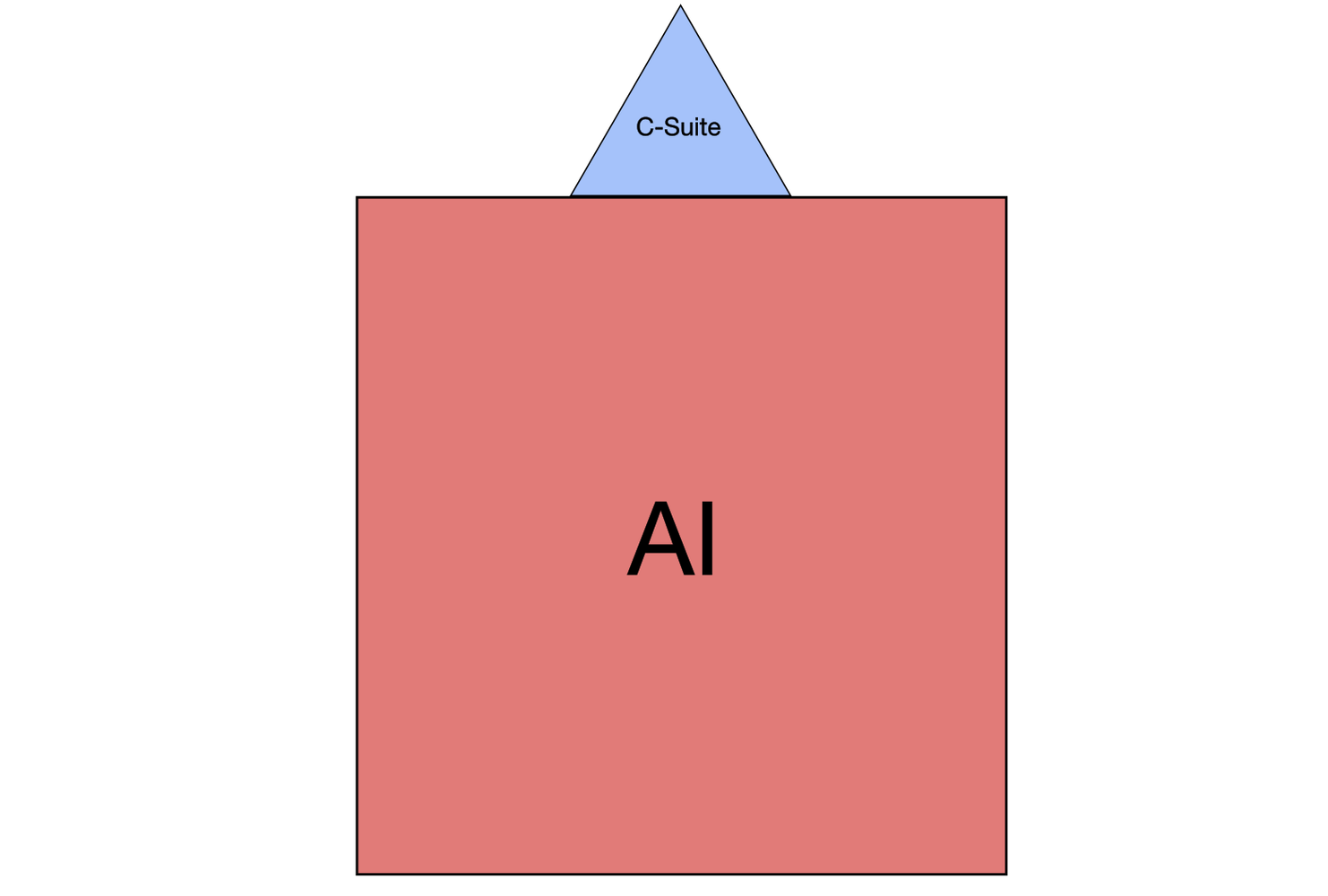
While this may look too futuristic, the possibility that AI could pass the Turing Test looked equally unlikely just a few years ago. In 2025, ChatGPT-4.5 is already able to successfully convince people it’s human 73% of the time.
As The Intelligence Curse observes: Researchers have even demonstrated a new Moore’s law: the length of tasks AI can complete is doubling every seven months.
It’s personal….
Given the dystopia painted above, how does the cliché “”AI won’t replace you, but someone who knows how to use AI will” sound?
As Bruce Daisley rightly remarks about that line: “It’s pretty clear that was just comfort talk, there’s a good chance AI really is going to take your job. (The idea that AI will do 95% of your job and you can charge the same for the last 5% is the sort of thinking we’ll look back and laugh at).”
He quotes two researchers from Anthropic who say that, “even if there is no technological advance from today the current level of technology is capable of automating all knowledge jobs before the end of the decade. Yes, that automation will require human calibration but once it’s in place it will perform a person’s whole job.”
Some companies have still not integrated AI into their systems. But the competition will pressure them by either pushing them toward obsolescence or forcing them to yield.
As things stand today, what Shawn (from the story at the start) asserts rings true: “The fact that people widely still have jobs today that are performed on the computer all day is not due to a lack of AI capabilities to replace them, but merely a lack of foresight and forward-thinking creativity on the part of their employers.”
He continues: “Companies, especially outside of high-tech, are too stuck in old-world business-as-usual thinking to have deployed comprehensive AI strategies with off-the-shelf AI technologies of today, let alone plan for the technologies that are coming in the next quarter, year, and decade. Their lack of ambition and creativity is the only reason most of us still have a job.”
Disturbing. Deeply disturbing.
How, then, can we prepare for what’s next?
In a previous newsletter, I spoke about the need to diversify your identity beyond work.
Kerckhove expands on the same in the new context of AI-led job losses.
“The truth is messier, harder, and ultimately more liberating: the most urgent skill you need to develop right now isn’t technical. It’s existential. You need to learn how to unhook your worth from your work.”
“The goal isn’t to care less about your work. It’s to build an identity robust enough to withstand major shifts in how that work is valued—by others and by yourself.”
To quote Daisley: “If we’re committed to learning, improving and keeping pace with a dizzying pace of reinvention then it’s the best way to prepare for a future where a lot of us won’t keep our jobs.”
“Right now, accepting it’s over might be your best survival plan.”
 Musings by Madhav
Leave a comment