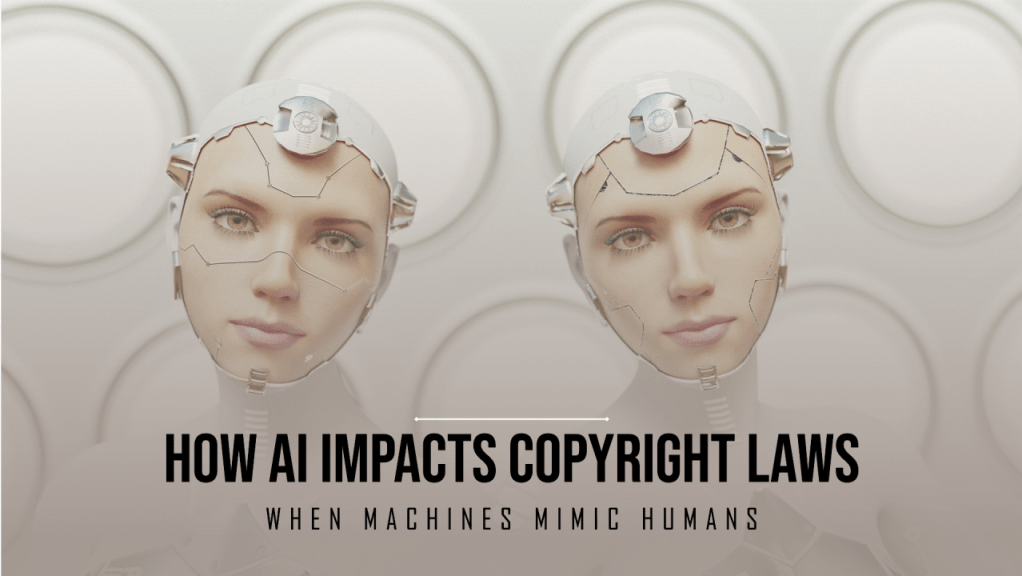
AI is coming for us. It has already come for celebrities and institutions.
Consider these three instances.
Case #1:
In May 2024, ChatGPT launched an AI voice assistant that sounded like a human.
It ended up upsetting actress Scarlett Johansson.
Why? The voice sounded eerily similar to her own.
In defense, OpenAI claimed it was done by a different voice actor. However, the fact that OpenAI had earlier approached Johansson to be one of the chatbot’s voices made such a defense untenable. Apparently, she had turned down the offer citing personal reasons.
Eventually, the company pulled down the voice.
Case #2:
In India early this year, the globally renowned music composer AR Rahman featured the voices of a few singers.
Why is that news? Because the singers in question were long dead.
In what appears to be a first-of-its-kind in India, a music composer used AI voice models to recreate the voices of singers long dead.
Case #3
In December 2023, New York Times (NYT) sued OpenAI for copyright infringement.
Briefly, NYT alleged that OpenAI’s tools offer free access to content protected by paywall, thus hurting NYT’s revenue. The outcome was problematic to NYT for two reasons.
One, giving free access to protected content might appear consumer-friendly, but it hurts the content creators where it hurts the most: their livelihood.
Two, given OpenAI’s propensity to ‘hallucinate’, it attributed to NYT the information it never published. It had thus put NYT’s reputation at risk.
What Does Copyright Law Say?
The copyrights issue was brought before the US Copyrights Office in early 2023. The Office wrestled with the central question of whether the content generated by such #GenerativeAI can be copyrighted.
Key highlights from the Office’s Guidance:
- It affirms the centrality of “human authorship” to register any expressive material.
- Photographs, though produced by camera, are “representatives of original intellectual conceptions of the author.”
- A monkey, for instance, cannot hold copyright to photos it has captured with a camera (remember: “human authorship”).
- When the AI produces work based on a prompt, the “traditional elements of authorship” are determined by technology. Significantly, the humans cannot control how the technology interprets prompts and generates material.
The Office admitted the degree to which a human can modify AI-generated content may be copyrighted. However, even here, the copyright will only protect the “human-authored aspects of the work”.
Copyrights Liability
To prove criminal liability, a lot of emphasis is laid on “intent”. However, since AI has no “adversarial intent”, it is difficult to place liability on it. This is because “learning” is an inseparable part of AI programs.
When AI reads, it’s simultaneously viewing, learning, consuming, memorizing, extracting and reconstructing. It’s difficult to distinguish between these functions. However, it’s possible to place guardrails for AI outputs (which can be effectively determined by people).
So, like machines, the liability does hold good for the people who designed and deployed the AI program.
In the near future, the courts may be flooded with cases of copyright infringement by AI. To preempt such an eventuality, it might be easier to constitute a safe harbor rule for AI use as well. If an AI company can prove that it put sufficient safeguards to reduce AI misuse, its liability in the event of copyright infringement must be limited.
Compensation
AI impacts the work by artists and creative professionals, their compensation and copyrights in a way that no previous technology did.
AI’s ability to mimic an artist’s work can be used to simulate new work without compensating the artist. Imagine a tool with the ability to mimic your writing style, to imitate your voice modulation (for dubbing artists), and to even reproduce your persona (for actors).
In 2023, ‘Writers Guild of America’ (representing 11,500 Hollywood screenwriters) went on strike for better pay. But it’s AI anxiety that underpinned their movement. The writers feared GenAI (like ChatGPT) could be used to undercut their pay and leverage.
In the above-cited instance of recreating dead singers’ voices, AR Rahman is reported to have compensated the singers’ family for using their voices.
Rahman has set a good precedent by asserting: “… when you do something commercially and it’s a money making thing, it’s legit to go and take permission. It’s important to compensate for it. So, a method has to be set and if nobody sets it, people will misuse it.”
There must be a way for artists and institutions to opt-out of the AI programs’ gaze and use (though I have doubts to the extent that this may be possible).
However, a collective license could be a better, more feasible alternative. A collective tax can be levied on AI providers, and this tax money could be fairly distributed to the artists and institutions based on usage.
Conclusion
We can argue for a more stringent application of copyright laws in the event of AI-based infringement. However, the benefits of such laws might be cornered by big players, leaving the standalone artists and creative professionals to fend for themselves.
A collective licensing approach lends itself to wider use, while enabling the artists to receive a fair share for their effort. However, again, guardrails must be at work to prevent this from becoming too exploitative.
Overall, AI is coming for us all, for our work, for our compensation.
Instead of being in denial or painting a doomsday scenario, it behooves us to set up a new Copyrights Regime that embraces the threat that AI poses and handles it best.
 Musings by Madhav
Leave a comment