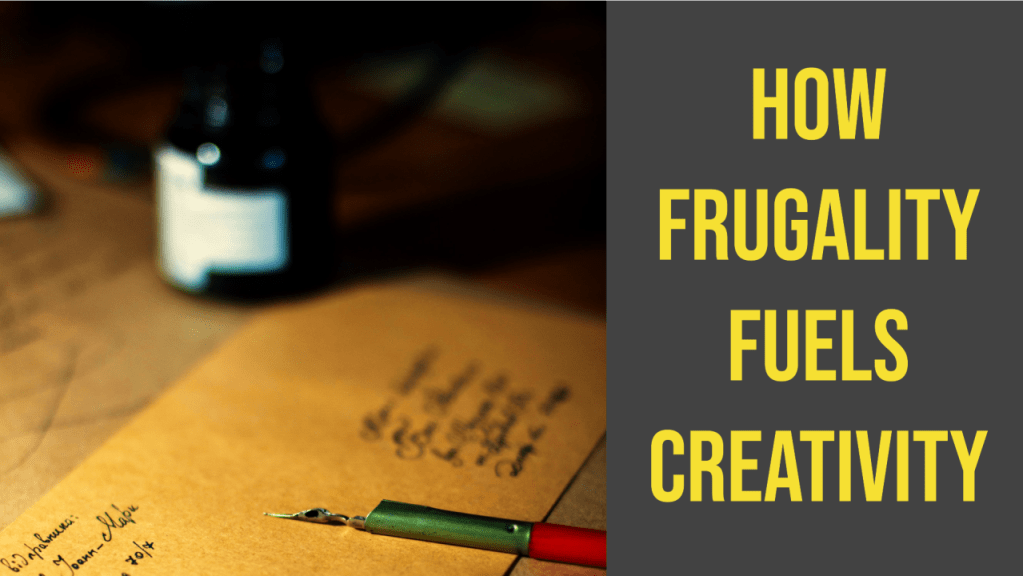
A few months ago, I passed through an India Post Office. Giving in to nostalgia, I got inside. Braving the interrogative gaze by the people around, I asked for a few cards and envelopes. Then, acting on an impulse, I wrote a letter to my grandfather and posted it right away.
As I look back, I recollect the time when we used to stock a dozen cards and envelopes at home. My father wrote to his family during Sunday nights and posted them enroute to the office on Mondays. Posting a letter midweek meant the upcoming weekend would delay the delivery. As soon as I learned enough to piece a few sentences together, I had to do my share of writing too.
Given the space constraints, our communication was economical. Only the remarkable found entry; we didn’t have the space luxury to relay the routine. Therefore, stream-of-consciousness writing was ruled out. What we needed to write was planned ahead and executed in precision.
Today, this sense of frugality has long gone. It has been upended by technology.
Consider the equivalent today. Very few would prefer writing an email (or even a WhatsApp message) over a direct call. Both of them allow for excesses without a cost.
You can type in a long email without any space constraints. You think you have saved the time required to edit and structure the message. But, it’s the reader who is now paying the cost. They must expend time and effort to make sense of the unpolished first draft.
You can talk for hours to convey a thing that only needs a few minutes.
Once you look around, this is everywhere.
The films from yester-decades had to contend with low-end and high-cost technology. And it influenced everything they did.
The CGI was only used where the script justified its use. Otherwise, innovative ways were found to bypass the technology’s use. As a result, the CGI use was highly economical in intent and content. They delivered exactly what they set out to do, nothing more and nothing less.
Earlier, the music barely clothed the lyrics. Today, technology makes it possible to indulge in endless iterations to create a dense, multilayered music. An advanced electronic piano lets you tinker with as many sounds as you wish to for as many times. Whether they are any efficient in communicating the song’s mood is up for debate.
Let’s take more recent examples.
It’s been my pet peeve that podcasts consume time like no other format. It’s content obesity on steroids.
Why do authors who give out so little of their key ideas in the written form embrace audio/visual content with both hands? To my mind, it’s because the format allows for people to speak for hours without giving out anything substantial. This makes it a perfect platform to promote their work and their personal brand.
The audience, though it doesn’t pay for the content, pays heavily in terms of the hours spent. I posit that we might be better off reading their books once than going through variants of the same ideas many times.
Does tech always lead to better creative outcomes?
I keep wondering: does ready availability of technology always translate to better creative outcomes?
Consider photo-albums. Back in the 1990s and early 2000s, they were a part of the welcome ritual for a guest. Together, they were just a few hundred photos. But they spanned years, even decades. It was a bird’s eye view of the family across ages.
Today, one would be hard-pressed to find a photo even from even a few years ago. Most photos taken during a trip resemble a full-blown live-streamed video. Everything is captured. So nothing stands out.
Significantly, where’s the story here?
Each photo in a photo-album represented an episode. It takes you back in time. Since photos were only taken to mark important events, they had to mean something. The missing photographs were not a bug, they were the feature instead. It required you to jog your memory and discover the missing links anew.
When “candid photography” is advertised, one knows how far things have deteriorated. Abundance of technology has cheapened what should ideally be treasured. When you can stretch the number of photos to infinity, you must relegate most of them to recycle bins. Only the perfect makes the cut.
A truly candid photo is one where you look away right at the moment the camera clicks. When someone unexpectedly photobombs a well-staged set-up. When your hazy eyes give you away.
How did we manage to let tech-led abundance exhaust our creative reserves? How did we end up like this so soon into the digital revolution?
PS: The letter I wrote to my grandfather hasn’t reached him yet (despite months’ time). I was expecting him to call me, expressing surprise. Instead, I received one.
On inquiring from a relative who retired from India Post recently, I was told the department has long turned into a semi-financial institution and courier service provider. Delivery of the good old inland letters was strictly contingent on the postmaster’s good sense.
 Musings by Madhav
Leave a comment