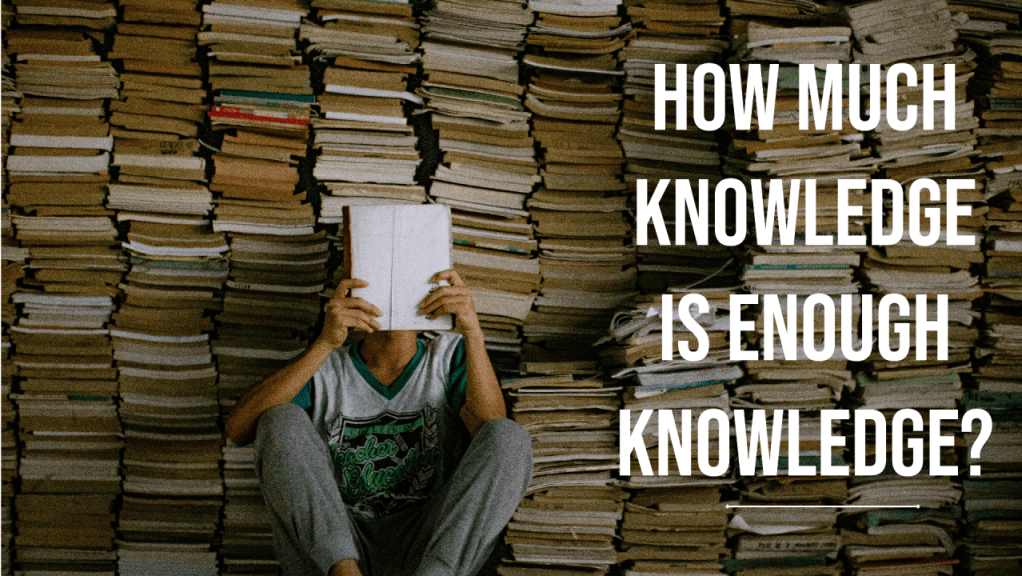
Books, books everywhere, not an hour to read.
Every year, we see a new list of books that promise to reshape our understanding of how the world works. I’m sure the writers feel this way in their heart. Why else would they dedicate years of toil to add to the tomes of writing? Particularly when the success rate is abysmally low.
But to a curious reader, this poses a problem: how much knowledge is enough knowledge?
Because at some point, we must acknowledge the shortness of life: we won’t be able to read 99% of books the world has to offer.
This brings me to the question of whether there is a reading equivalent of Minimum Effective Dose, the smallest dose that will produce a desired outcome.
When I set about studying the western philosophy, I was at a loss to know where to start. Then, I stumbled upon Will Durant’s “The Story of Philosophy”. In just one book, Durant chronicles the philosophers’ lives and summarizes their entire oeuvre.
Curiously, Durant doesn’t see his book as a replacement for the philosophical works. Instead, he likens his work to an appetizer that stimulates the readers to read more of the original philosophical texts.
Nonetheless, for people neither intellectually indulgent nor time affluent, this book offers a ready reprieve. “The Story of Philosophy” is uniquely-qualified to be the “Minimum Effective Dose” as far as the western philosophy is concerned.
Among the tons of books on writing advice, if you have time for just one, go for William Zinsser’s “On Writing Well”. Sure, there are many other books offering great writing advice. Yet, Zinsser’s book can help you make a good enough leap.
For a starter on public policy, I recommend “Missing In Action”. Should you wish to advance your policy understanding, I would point to “In Service of the Republic”.
When was the first time I started thinking in these lines?
I think it’s when I noticed a common strand between books as different as Viktor Frankl’s “Man’s Search for Meaning” and Ayn Rand’s “The Fountainhead”.
To my mind, the most visible commonality was the influence of German philosopher Friedrich Nietzsche.
The deja vu was reinforced when I read the works of many modern writers of philosophy and self-help literature. Where people saw new ideas, I saw Nietzsche’s underlying influence. It was then I posited that one might be better served reading Nietzsche than reading many modern books put together.
One fine day, when reading the famed detective works of Agatha Christie, I was surprised they failed to impress me. It then occurred to me I had maxed out with the complete works of Sherlock Holmes already. Once the novelty of the detective genre is worn off, it’s hard to recreate the same impact.
As a result of my experiments, lately, I strive to read vastly different genres instead of spreading myself thin in genres I’m already familiar with.
The idea is to know enough of multiple subjects to be able to connect the dots. For instance, if you have deeply read “The Atomic Habits”, you are only a few blogs or podcasts away from understanding “Deep Work” and “The Psychology of Money”. The latter are not entirely new books to my mind.
Much energy is expended towards expanding the list of books we’ve read.
This is important. But there’s something more important.
To re-read the books that impressed you most.
Reading is how you converse with the author one-on-one.
When I read a book, I: “…begin almost semiconsciously to fill in gaps in the text, using my own experiences to extrapolate a complex inner or external landscape from a brief description of a character’s perceptions or dress. In doing so, I become a kind of co-author of the text I am reading, which means that in some sense the book I am reading will always be unique to me.” (Source)
I would add that even the book you are re-reading will always be unique. The experiences you have accrued between the first reading and current iteration will help you extract fresh insights from the same text.
It’s more important to digest what you know than swallowing all you can.
Significantly, while these are my suggestions, what works for you might be different.
As Ayn Rand says, “The pursuit of truth is not important. The pursuit of that truth is important which helps you in reaching your goal.”
What’s that one book that will empower you with insights of ten?
Your goals necessitate a unique set of books. And, it’s your job to explore and identify the knowledge-sources that can accelerate your learning journey.
 Musings by Madhav
Leave a comment