
Put yourself in your customers’ shoes, goes the saying.
To this end, marketers create a marketing persona of the target audience. The idea is to paint the picture of your ideal customer in as much detail as possible.
Here’s an example:
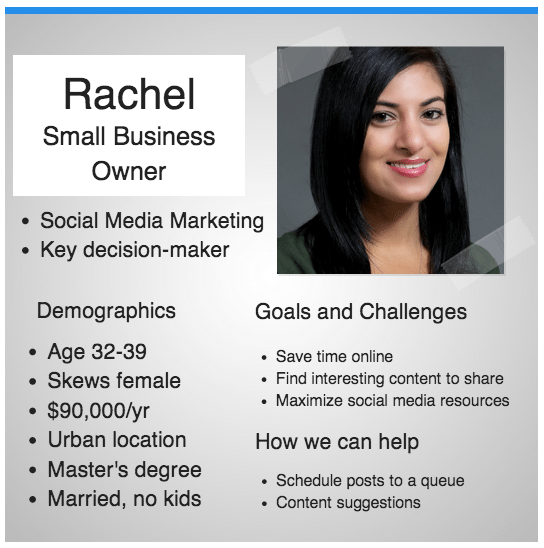
This is a good start. It’s better than campaigning without an eye on what the customer wants.
However, you need to avoid the common pitfalls for this approach to work.
1. Current Status vs. Intent
We base the customer personas on the current station of the customer’s journey. However, their current status may have nothing to do with the path the customer wishes to take in the future.
For instance, from their trajectory, you may think your customer’s next step is product expansion. However, it’s possible they plan to specialize in a niche domain.
If your messaging speaks to a company planning to expand, it may not connect with one that’s narrowing focus.
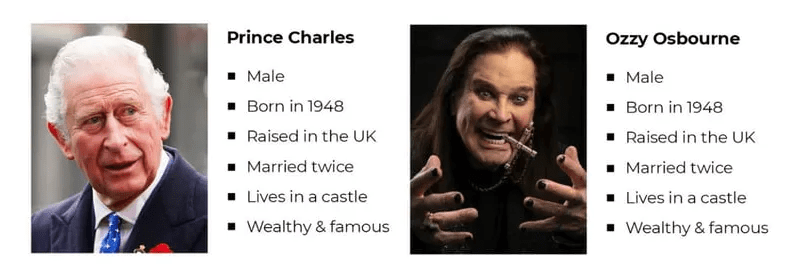
2. Your Stated Positioning vs. Customer Perception
In a previous organization, our webinar initiatives revealed a surprising discovery about how customers perceive us.
Our thought leadership webinars, planned and executed meticulously, gave us a decent response.
However, our services-focused webinars, particularly services we were well-recognized for, typically gave us much-better outcomes.
The bittersweet pill for us was this: that customers didn’t associate us with thought-leadership stuff yet. But in services we were known to excel, they readily looked up to us for more insights.
How we position ourselves must always be compared with how our customers perceive us.
3. Scripted Content vs. Human Communication
Content creation, today, requires the least effort of all marketing initiatives. With most companies beginning to use GenAI/ChatGPT, content produced using them can end up looking too generic.
In a world flooded with content, scripted messages rarely stand out. You have a better shot at success if your messages display humanity, understanding of customer needs, and empathy for their business challenges.
All this must necessarily come from unscripted, context-specific content and strong human connection.
4. Targeting Too High
Most marketing campaigns are designed for the C-level executives.
But here’s something marketers need to consider. It’s unlikely your message will make its way straight to the prospect’s leadership team.
Instead, you are better served by targeting people who influence the leaders’ decisions. These people are most motivated by the desire to impress their bosses, the leaders.
When they’re looking at your message, they’re asking themselves: “If I pitch this to my boss, how will it make me look?”
Therefore, your campaign’s success relies on your ability to give this people-group the material to look smart in front of their boss.
5. Real vs. True Reasons
Can’t a survey reveal customer preferences? Not so easy.
Conversing with a veteran sales professional, I asked him what made him thrive through all these decades. He responded: the ability to distinguish between real and true reasons behind a rejection.
He continued, most prospects offer a reason for rejecting our sales pitch. For instance, a prospect may claim that big changes are underway at the company, which makes a deal impossible now.
This could in fact be true. However, it’s possible this is not why your deal is being rejected.
The real reason could be that the prospect has already zeroed in on another vendor for their project.
As David Ogilvy said: “The trouble with market research is that people don’t think what they feel, they don’t say what they think and they don’t do what they say.”
Conclusion:
We urge marketers to “think from customers’ perspective“. But this too, far from being an objective truth, is based on the marketers’ assumptions.
We fill in the gaps in our research with ideas we find expedient. And, as we saw above, even if done rigorously, research cannot unearth customers’ innermost thoughts.
Regardless, this is still a good start. In any case, it’s better to have a roadmap instead of going wherever the wind blows.
Use your intuition and experience to tinker with the approach and settle for a strategy that works for your business.
Because the approach was always meant to be used as a guidepost, not as a template.
 Musings by Madhav
Leave a comment